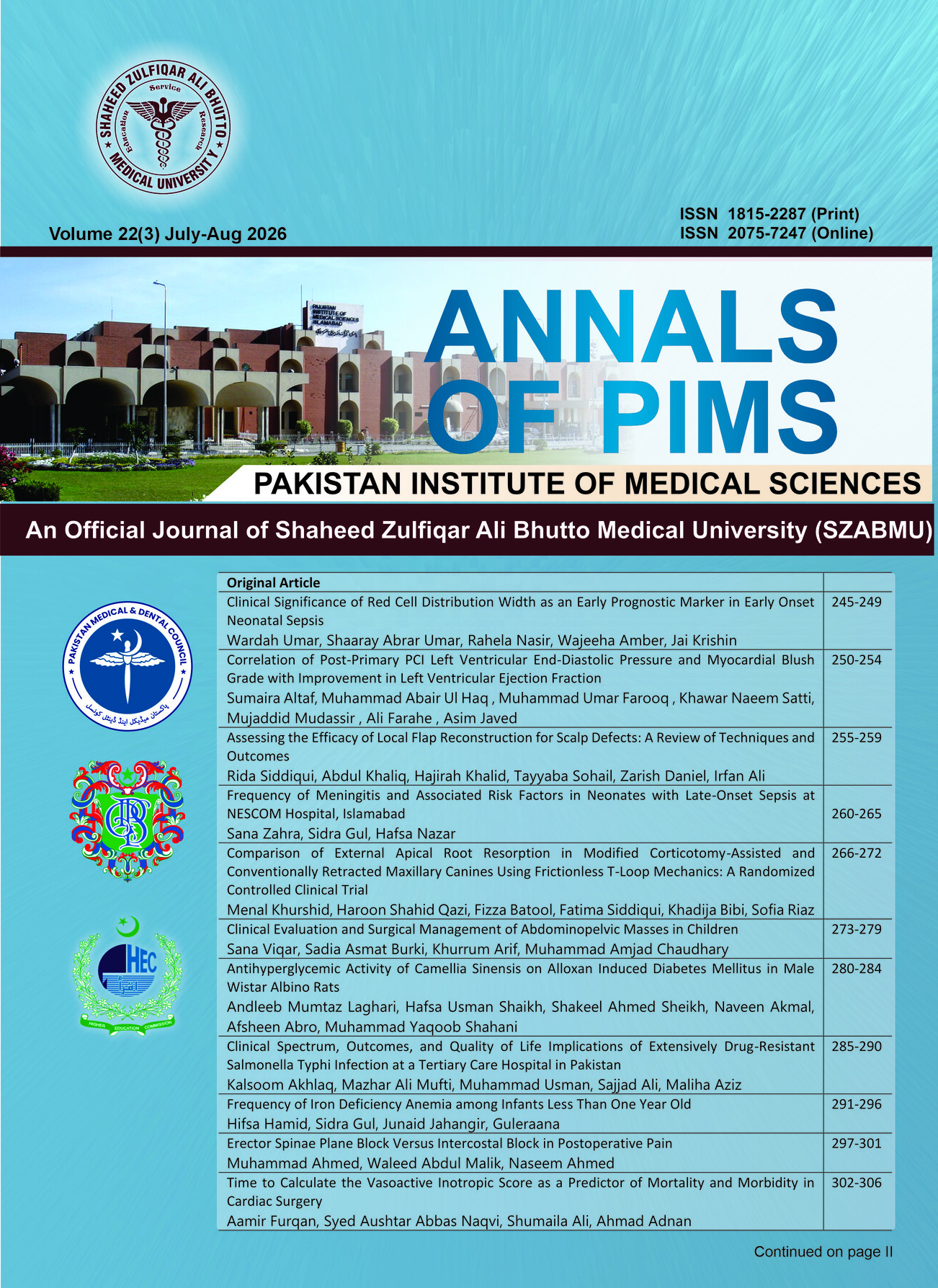
Frequency of Iron Deficiency Anemia among Infants Less Than One Year Old
DOI:
https://doi.org/10.48036/apims.v22i3.1372Keywords:
Minimally invasive surgery, gynecology, patient outcomes, recovery time, surgical complications, patient satisfaction.Abstract
Objectives: To determine the prevalence of iron deficiency anemia (IDA) at a tertiary care Hospital.
Methods: This cross-sectional study was conducted on 185 infants aged 6–12 months attending pediatric outpatient clinics at Islamabad Medical Complex Nescom. After obtaining the sociodemographic characteristics, feeding practices, maternal health, and birth history, the hemoglobin levels were measured, and iron deficiency anemia was defined as hemoglobin <11 g/dL with supportive clinical and laboratory findings. Statistical analysis was performed using SPSS version 26.
Results: The mean age of infants was 7.09 ± 2.34 months. The overall prevalence of IDA among infants was approximately 29.1%, with overall mean hemoglobin level among anemic infants was 10.11 ± 2.17 g/dL. Additionally, the IDA was significantly associated with Cow's milk-fed infants and low socioeconomic groups (p=0.001), while there was no significant association of IDA with age, gender and residential status of the (p >0.05).
Conclusion: IDA was concluded highly prevalent among infants, which was further significantly linked to modifiable nutritional and maternal factors. The good feeding practices and maternal nutrition are very important to reduce the morbidity among infants.
Key words: Infants, IDA, Hb, Serum Iron.
Downloads
Published
Issue
Section
License
Copyright (c) 2026 Hifsa Hamid, Sidra Gul

This work is licensed under a Creative Commons Attribution-NonCommercial 4.0 International License.
This is an Open Access article distributed under the terms of the Creative Commons Attribution License (https://creativecommons.